In Gramado, winter cuisine blends the sophistication and heritage of European immigrants with the abundance and hospitality typical of Rio Grande do Sul, turning every meal into a complete sensory experience.
The fondue sequence ritual
Of Swiss origin, fondue was adopted by Gramado decades ago and gained a unique local signature: the famous fondue sequence. More than just dinner, it is a ritual of sharing meant to be enjoyed at a leisurely pace.
The traditional experience is divided into three all-you-can-eat courses served at your table:
Cheese fondue: a creamy blend of premium melted cheeses (such as Gruyère and Emmental), accompanied by cubes of Italian bread, steamed baby potatoes, broccoli, carrots, and traditional guava paste—a Brazilian touch that pairs perfectly with the saltiness of the cheese.
Meat fondue: select cuts of filet mignon, pork loin, and chicken breast that you grill yourself at the table on a hot stone (la pierrade). This course comes with over a dozen artisanal sauces (such as garlic, fine herbs, cheese, pepper jelly, and rosé).
Chocolate fondue: the sweet finale features authentic melted artisanal chocolate from Gramado, served with fresh seasonal fruits (strawberries, grapes, bananas, pineapple, and kiwi), as well as marshmallows and wafers.
Classic galeterias and Italian heritage
Whether for lunch or dinner, sitting down at a traditional Galeteria in Gramado is a deep dive into the legacy of Italian immigrants. Served in a hearty sequence directly to your table, the meal always begins piping hot to ward off the mountain chill:
Capeletti soup: an aromatic, homemade chicken broth with stuffed pasta, served with rustic bread and grated cheese.
Radicchio salad with bacon: a regional classic where the slight bitterness of the greens is balanced by a warm dressing of crispy bacon and vinegar.
Galeto al primo canto: roasted over charcoal with a blend of herbs and white wine, it arrives at the table golden, juicy, and with crispy skin.
Traditional sides: crispy fried polenta (or grilled on the griddle), homemade pasta with various sauces (such as four-cheese, bolognese, and pesto), and potato salad.
The authenticity of German cuisine
Blueberry cucas baked in wood-fired ovens during the Colonial Festival. Photo: Cleiton Thiele/SerraPress
The strong Germanic influence on Gramado's history and architecture is also reflected at the table with comfort food. In traditional German restaurants and at the iconic Casa do Colono (in the Praça das Etnias), visitors will find recipes preserved for generations:
Main dishes: the classic Eisbein (pork knuckle, boiled or roasted with crispy crackling skin), the Kassler (smoked pork chops) and artisanal sausages (BockwurstandBratwurst), always served with sauerkraut, applesauce, dark mustard, and boiled or sautéed potatoes.
Wood-fired breads and cucas: at the Praça das Etnias, the community ovens bake German cucas daily with a crunchy streusel topping (in grape, blueberry, apple, dulce de leche, and chocolate flavors) as well as breads stuffed with sausage and cheese—the latter, in fact, is an intangible cultural heritage of Gramado.
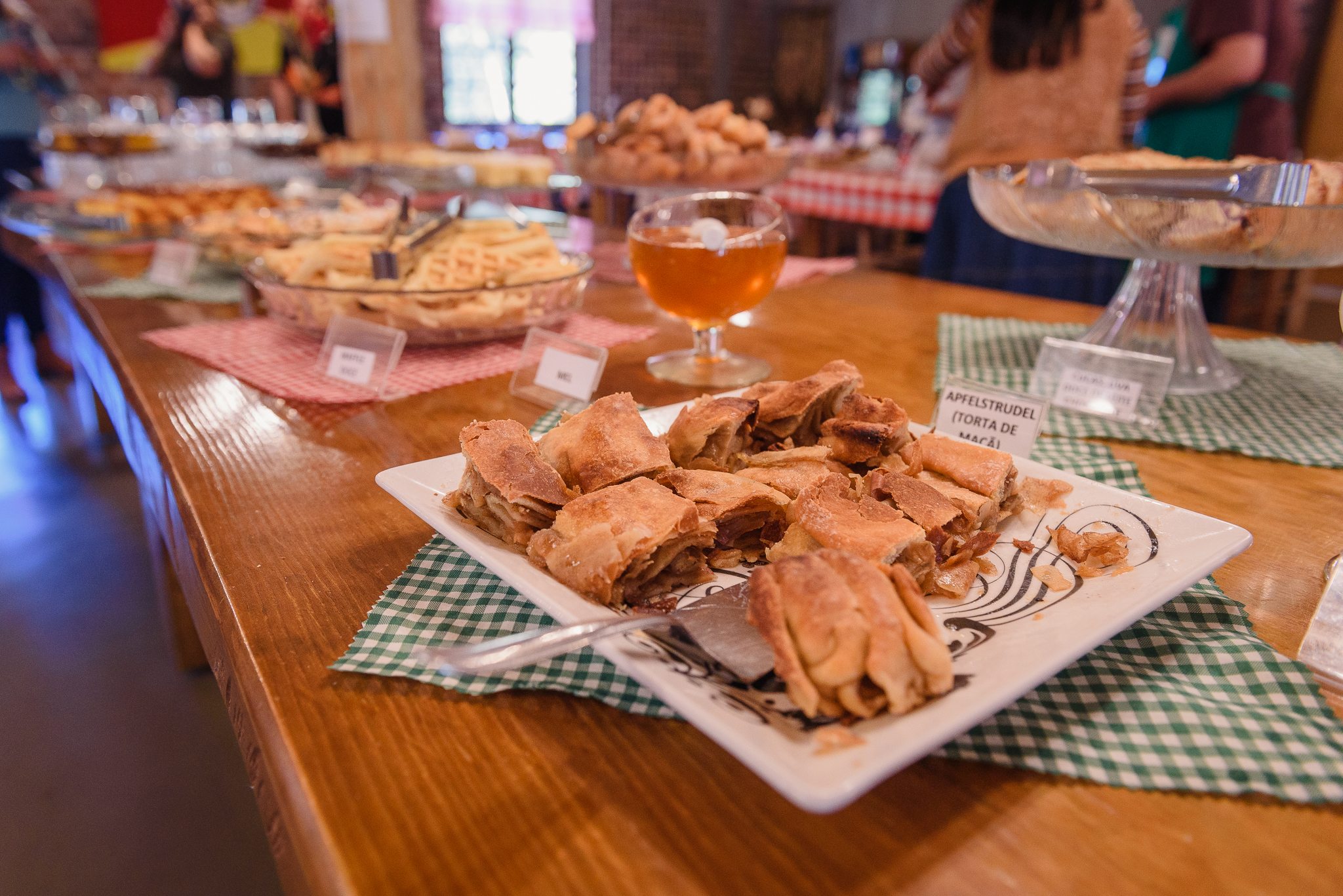
German desserts: the Apfelstrudel (apple strudel with cinnamon and raisins), served warm with fresh cream or vanilla ice cream, is a must-try at the city's bakeries.
The abundance of a Gramado colonial coffee
Apfelstrudel and other delights on the table at a colonial coffee house in the Gramado countryside
A meeting point between German and Italian traditions, the colonial coffee is a true gastronomic treasure of Gramado. Originally prepared to provide energy after working in the fields, it is now a festive meal that brings together dozens of varieties of sweet and savory dishes:
On the savory side: homemade corn and cassava breads, colonial cheeses, artisanal salamis, boiled sausages, potato pancakes, quiches, savory pies, and traditional fried chicken pieces.
On the sweet side: cucas, homemade cakes, decorated layer cakes, ambrosia, tapioca pearls in wine sauce with custard, and artisanal fruit preserves.
To accompany: freshly brewed coffee, hot milk, creamy hot chocolate, aromatic herbal teas, pure grape juice, and local wine.
Planning tip: Since the colonial coffee is extremely hearty, the best strategy is to schedule it for the mid-to-late afternoon, replacing both lunch and dinner for the day.
The tradition of artisanal chocolate
Gramado holds the official title of National Capital of Artisanal Chocolate. The story began in the 1970s, when recipes inspired by Swiss Alpine chocolates started being produced by hand in the city, prioritizing high cocoa butter content and select ingredients.
Visiting the chocolate shops and factories in Gramado is even more inviting:
Factory tours: several local brands have spaces open to the public where you can get a close-up look at the artisanal production process through glass walkways.
Creamy hot chocolate: a must-stop between sightseeing, the hot chocolate served in Gramado's cafes has a thick, velvety texture, perfect for warming your hands and palate on cold days.
Guide: how to organize flavors in your itinerary
Italian galeteria (lunch or dinner): start with a piping hot bowl of capeletti soup to warm up.
German cuisine (lunch or a snack in the square): try the Eisbein at traditional restaurants or the warm cucas at the Praça das Etnias.
Coffee and pastries (late afternoon, from 3 PM to 6 PM): come with a big appetite; the hearty spread replaces both lunch and dinner.
Fondue course (dinner, from 7 PM onwards): book in advance on weekends and during peak season.
Artisan chocolate (afternoon break): try our creamy hot chocolate and pick up bars straight from the factory stores.